
Democracy faces real threats today. Disinformation spreads fast on social media, and trust in institutions drops each year. In 2026, surveys show over 60% of Americans worry about fake news swaying elections. AI for democracy offers hope. This tool can cut both ways—it might worsen divides or build stronger systems. We see AI already shaping how people learn facts and join public talks. This article lays out a clear plan. It shows how to use AI ethically to protect and grow democratic ways. You get steps for better participation, strong defenses, and solid rules.
Mapping the Threat Landscape: Where AI Undermines Democratic Integrity
AI brings risks to democracy if we ignore them. It speeds up false info and hides biases in daily tools. We must spot these dangers first. Only then can we build fixes that last.
Disinformation Campaigns and Synthetic Reality (Deepfakes)
AI makes fake videos and stories in seconds. These deepfakes fool people into wrong beliefs about leaders or votes. In the 2024 US elections, experts noted AI tools boosted foreign meddling. Groups used generative models to create viral clips that twisted facts. Now in 2026, platforms see more of this. It erodes trust when citizens can’t tell real from fake. Governments track these campaigns, but AI’s speed outpaces old checks.
Algorithmic Bias in Civic Services and Representation
Many government AI systems learn from flawed data. This leads to unfair outcomes in policing or aid distribution. For example, predictive tools once targeted poor neighborhoods more, based on past arrests. Such bias hits minorities hardest and breaks equal rights. In civic services, AI decides loan approvals or job matches. If data ignores certain groups, it widens gaps. Democracy suffers when representation feels rigged.
Erosion of Informed Consent and Deliberation
Recommendation algorithms push content that matches your views. This creates echo chambers where diverse ideas fade. People miss out on talks that build consensus. Micro-targeting sways votes by feeding tailored ads. Studies show it boosts polarization, as users stick to one side. Healthy democracy needs open debate. Without it, consent comes from narrow info, not full pictures.
Pillar One: Enhancing Civic Participation Through Transparent AI Tools
AI can pull people into democracy if we make it open. Transparent tools let citizens see how decisions form. They build trust and cut barriers for all voices.
AI-Powered Tools for Accessible Legislation Analysis
Complex laws confuse most folks. AI summaries turn them into simple reads. Governments can set rules for plain outputs, like short bullet points on impacts. One tool scans bills and explains effects on daily life. Citizens use it to follow debates. This boosts engagement without needing experts. Start small: Test in local councils for feedback.
Improving E-Participation Platforms with Sentiment Analysis
Public input often drowns in noise. Natural language processing sorts comments by theme and tone. It spots trends from quiet groups, not just big donors. Platforms then show balanced views to leaders. This ensures all voices count in policy. Add filters for spam to keep it fair. Results help craft better rules that fit real needs.
Verifiable Digital Identity and Secure E-Voting Infrastructure
Voting lines and fraud fears keep some away. AI spots odd patterns in online votes, like bot swarms. Machine learning checks IDs without storing extra data. This makes e-voting safe and easy. Test it in trials to fix weak spots. Citizens gain confidence to join from home.
For more on building AI tools like these, check prompt engineering basics.
Pillar Two: Strengthening Democratic Institutions Against Malign Influence
Defense matters as much as outreach. AI spots threats early and checks power in offices. It turns tech into a shield for fair play.
Real-Time Disinformation Detection and Source Provenance Tracing
AI scans posts for fake signs, like odd video glitches. It traces shares back to origins across sites. Models learn from past campaigns to flag patterns fast. A 2026 study on X found AI fact-checks helped users from all sides. Detection needs clear rules on what to block. Teams train systems on real data for accuracy.
Algorithmic Accountability Audits for Public Agencies
Governments use AI for big calls, like aid picks. Independent audits test for bias and results. Check fairness by group and match to goals. Publish reports so citizens see the process. This holds agencies accountable. Set yearly reviews to catch issues soon.
Using Predictive Modeling for Electoral Vulnerability Assessment
Models predict hot spots for meddling based on past data. They flag areas with high fake news hits. Ethics guide use: Share findings with locals, not for control. This preps defenses before votes. Focus on education in weak zones to build resilience.
Pillar Three: Establishing Robust Governance and Ethical Guardrails
Rules set the path for AI use. Without them, good intentions fail. Strong frames mix tech with human oversight for trust.
Mandating Explainable AI (XAI) in Public Sector Deployment
Black box AI hides how it decides. Explainable versions show key factors, like data weights. In democracy, this means clear links to fair outcomes. Require reports on choices for public tools. Citizens understand and challenge if needed. This fits open government standards.
Cross-Sector Collaboration: Tech Industry, Academia, and Civil Society
No one group solves this alone. Form panels like climate boards for AI standards. Include firms, schools, and groups for balanced input. Switzerland’s 2025 public AI model came from university-government ties. It shows non-profit paths work. Meet often to update rules as tech changes.
Developing Digital Literacy Curricula Focused on Algorithmic Awareness
People need skills to spot AI tricks. Add classes on how algorithms shape feeds. Teach kids to question sources in school. National plans can roll this out wide. It arms citizens against manipulation long-term. Parents and communities join for full reach.
Case Studies in Democratic AI Implementation (Examples of Success and Cautionary)
Real uses show what works and what doesn’t. We learn from wins and flops to guide future steps.
Success Story: AI in Streamlining Public Comment Review
In Europe, one city used AI to sort thousands of input notes on urban plans. Natural language tools grouped ideas by topic and highlighted common concerns. Leaders saw balanced views, including from low-income areas. Policies improved, with more buy-in from residents. Engagement rose 40% in follow-ups. This cut time from months to weeks.
Cautionary Tale: The Pitfalls of Unchecked Predictive Resource Allocation
A US state tried AI for aid during a crisis. The model pulled from old data heavy on urban stats. Rural spots got less help, sparking protests. Audits later found bias in training sets. Public trust fell, with lawsuits claiming unfairness. It showed the cost of skipping checks upfront.
Conclusion: Securing the Democratic Future
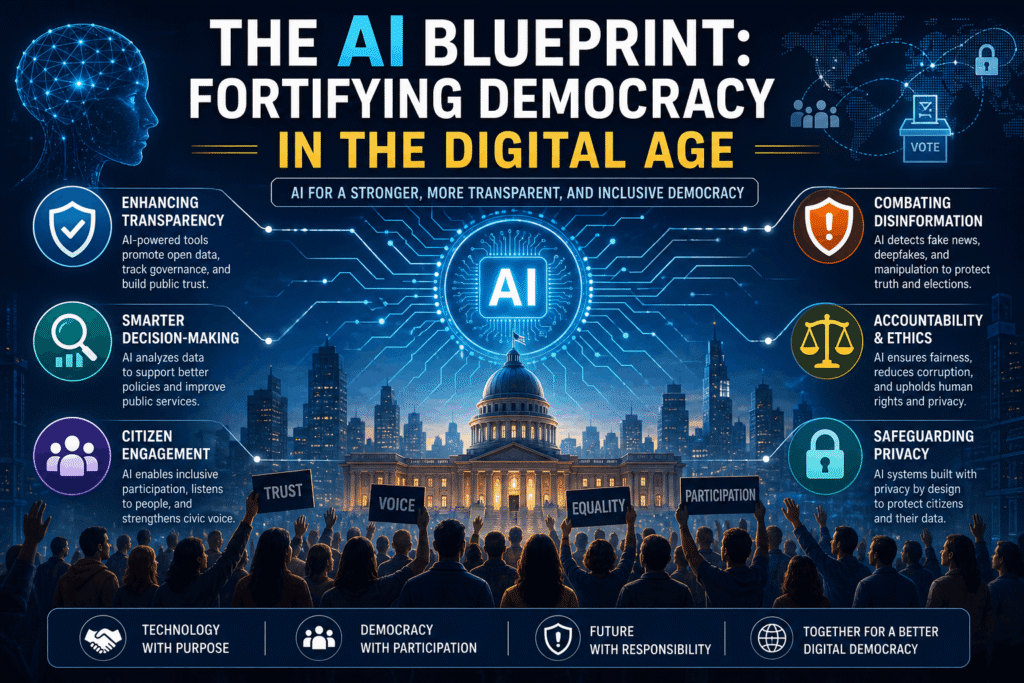
AI multiplies what we put into it. Good designs strengthen democracy; bad ones tear it down. This blueprint rests on three pillars: boost participation with open tools, defend institutions from attacks, and set firm ethical rules. Act now to shape AI for public good.